
Wrestling strength training is not about building a gym body. It is about making every position more useful. A stronger wrestler can keep posture under pressure, finish a clean attack, return to stance after a scramble and keep working when a match gets ugly. The weight room matters because it gives the mat work more force behind it.
The catch is simple: more lifting is not automatically better wrestling. Practice, drilling, live rounds, school, sleep and a hard competition schedule all draw from the same recovery account. The best plan builds strength without turning the athlete into a tired lifter who cannot move well on the mat.
This guide gives wrestlers and parents a clear starting point. It is not a substitute for a qualified coach, athletic trainer or medical professional, especially after an injury. It is a way to make the work in the gym support the work that decides matches.
Start with what wrestling asks of you
Wrestling is repeated acceleration, deceleration, pulling, pushing, bracing and changing levels. You need legs that can drive through a finish, hips that can resist being folded, a back that can stay strong in a tie and hands that keep working late in a period. That does not mean every lift has to copy a wrestling move. It means the program should develop the physical qualities that show up in those moments.
A useful strength plan has four priorities: build lower-body force, strengthen the back and grip, train the trunk to resist unwanted movement, and keep enough athletic speed to make that strength usable. The right exercise is the one you can learn, load and repeat with clean technique.
Build a base before chasing power
Power is strength used quickly. It is tempting to jump straight to explosive work, but wrestlers get more from it once they can control basic positions. A well-run resistance program can improve strength and power when it is coached, progressed gradually and matched to the athlete. The National Strength and Conditioning Association’s position statement on youth resistance training makes the same point: supervision, sound technique and sensible progression matter more than a flashy exercise list.
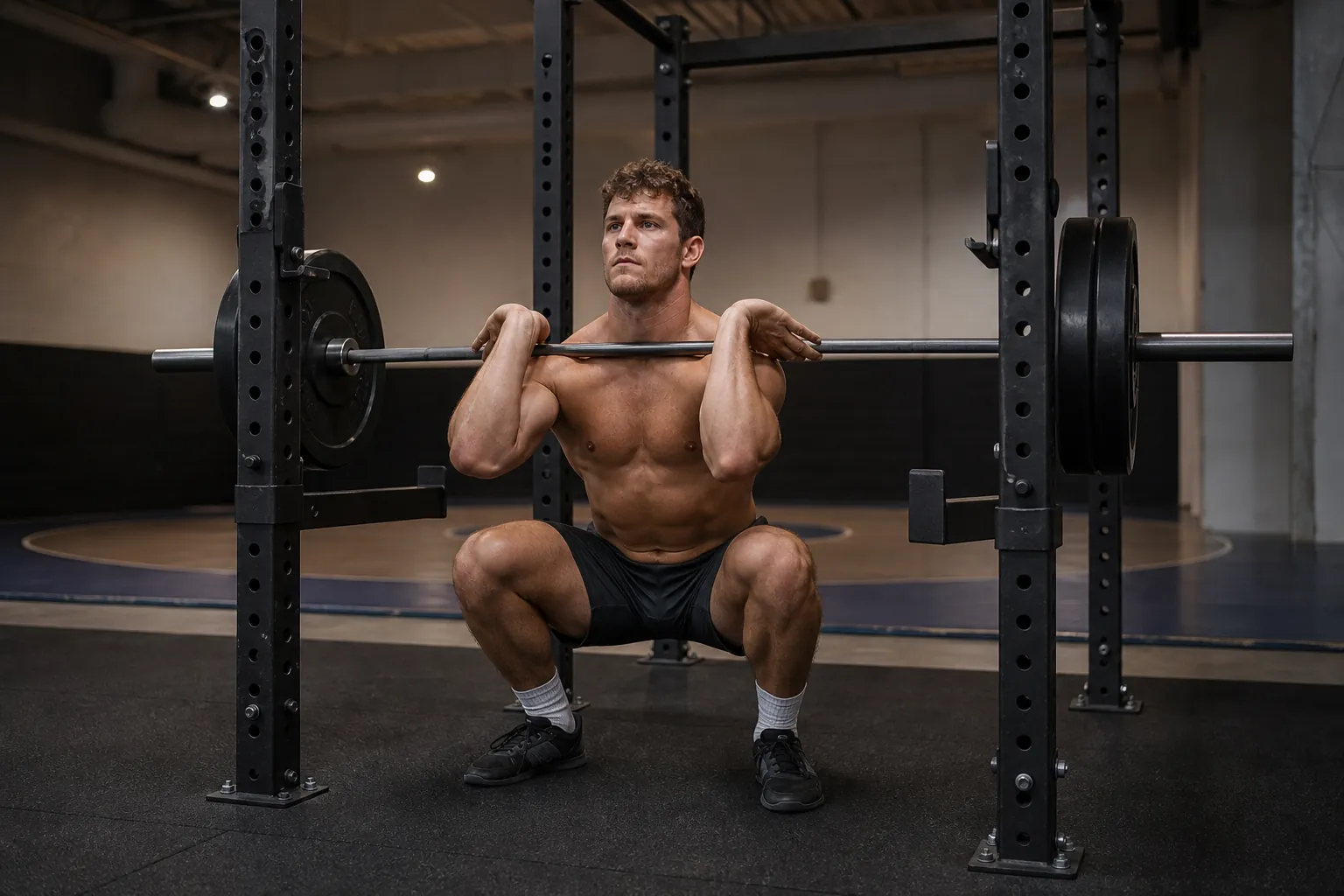
Start each session with a small amount of movement preparation, then put the most demanding lift first. For one athlete that may be a front squat. For another it may be a goblet squat, split squat or trap-bar deadlift. A simpler version is not a lesser version when it lets you train hard with good positions.
- Squat pattern: front squat, goblet squat or split squat for leg drive and level changes.
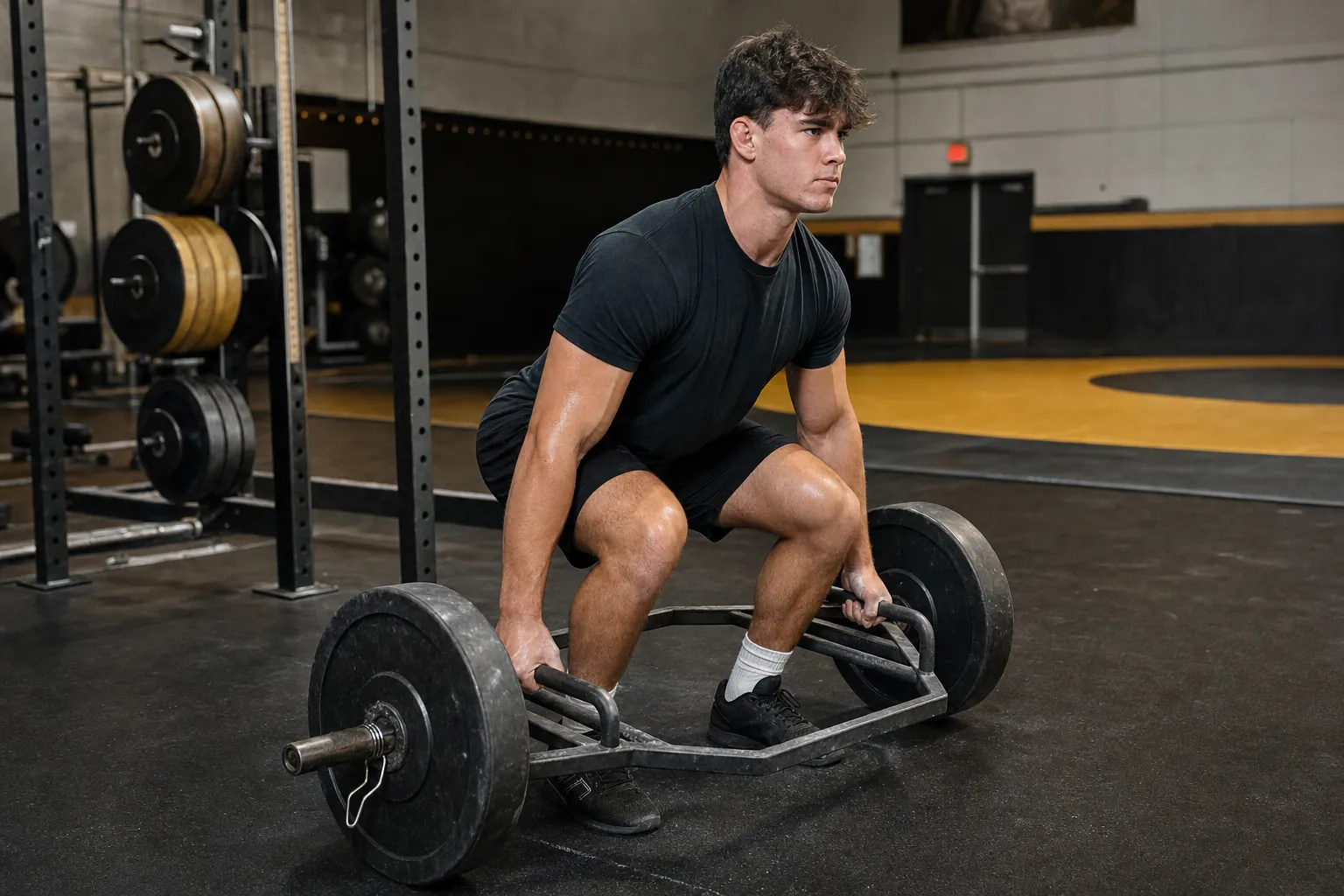
- Hinge pattern: trap-bar deadlift, Romanian deadlift or hip thrust for hips and hamstrings.
- Pull: pull-ups, rows and cable rows for posture, ties and hand fighting.
- Press: push-ups, dumbbell presses or landmine presses for balanced upper-body strength.
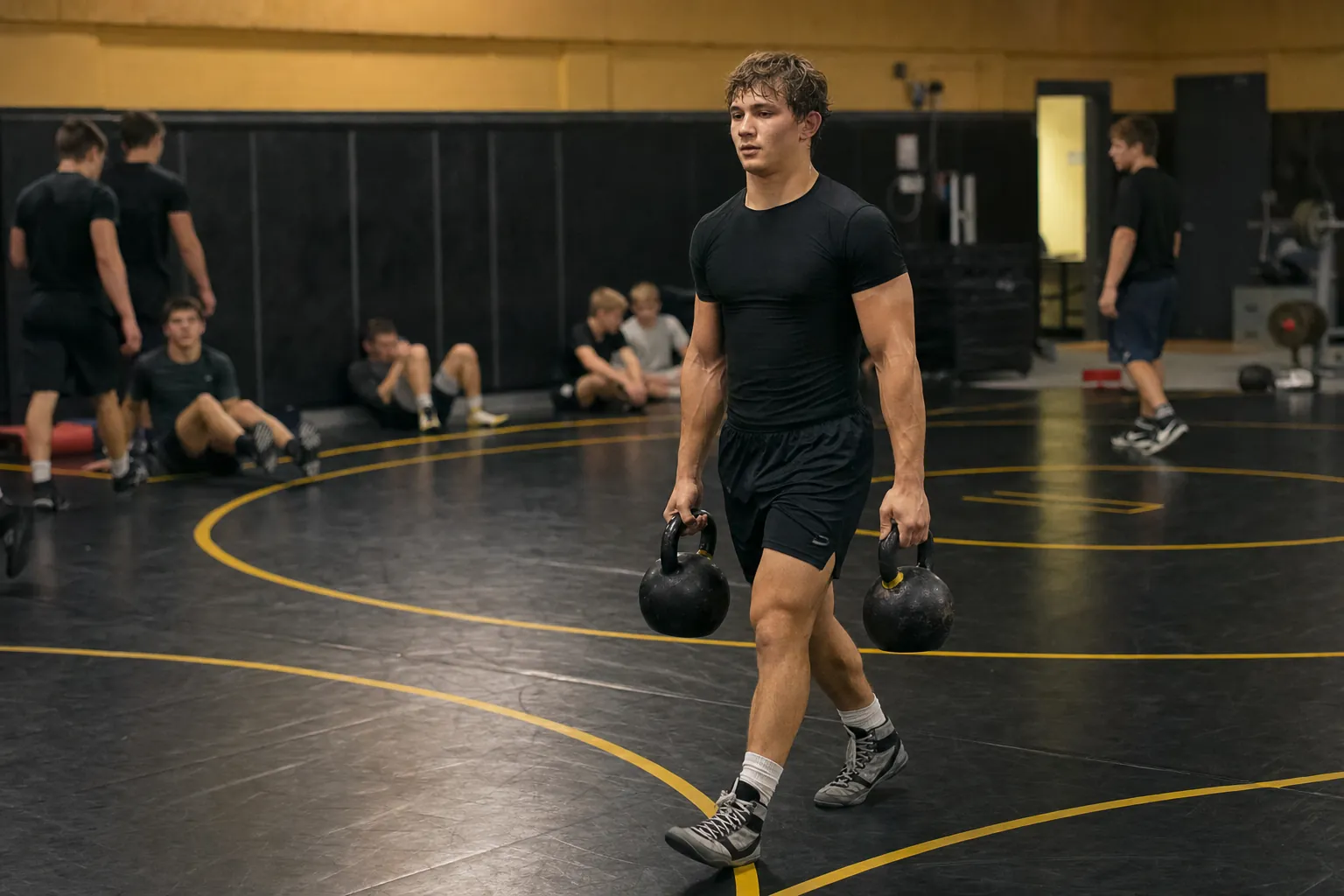
- Carry and brace: farmer carries, suitcase carries, planks and dead bugs for grip and trunk control.
Make the lower body the engine
A wrestler’s legs and hips drive almost everything. They create force on a penetration step, hold position in a scramble and help you stand back up when an opponent is hanging on your head. Two or three lower-body movements per session are usually enough when they are chosen well and trained consistently.
Use one main lower-body lift, then add one or two supporting movements. For example, a front squat can be paired with a Romanian deadlift and split squat. A trap-bar deadlift can be paired with step-ups and hamstring work. Keep the main lift controlled and leave one or two solid reps in reserve most of the time. Grinding every set to failure adds fatigue that does not reliably improve a wrestler’s next practice.
For younger athletes, bodyweight patterns, dumbbells and lighter loads can build the same habits. The American Academy of Pediatrics guidance on strength training notes that youth programs should be supervised and focused on proper form rather than maximum loading.
Train the back, grip and trunk for hard positions
Strong legs are not enough if your upper body collapses in a tie. Put pulling work in every session. Pull-ups, chest-supported rows, one-arm dumbbell rows and cable rows give the upper back plenty of attention without needing a complicated menu. A simple target is to do at least as much pulling as pressing, and often a little more.
Grip deserves direct work too, but it does not need to be endless grippers after every practice. Heavy carries, towel hangs, fat-grip holds and rows already challenge the hands. Add one grip movement at the end of a session, keep it brief and stop before your elbows start complaining. The point is durable hands, not sore forearms that make the next day’s drilling worse.
Trunk training should teach you to resist being pulled out of position. Planks, side planks, dead bugs, Pallof presses and loaded carries fit well because they train bracing without asking the spine to do the job alone. The result should feel like a more stable body in contact, not just a longer ab circuit.
Keep the program short enough to recover from
Two well-built full-body sessions are enough for many wrestlers, especially in season. Three sessions can work in an off-season block when mat volume is lower. What matters is whether the athlete is progressing, moving well and still bringing energy to practice.
A simple two-day structure
Day A: squat variation, pull-up or row, dumbbell press, single-leg movement, carry, trunk work.
Day B: hinge variation, row or pull-up, push-up or landmine press, split squat, grip hold, trunk work.
Start with two or three work sets on the main lifts and keep accessory work to two or three sets. Add a small amount of weight or an extra repetition only when the previous week looked clean. That approach is less exciting than random punishment workouts, but it is the approach athletes can run long enough to get stronger.
In season, reduce volume before reducing quality. Keep one or two challenging but clean sets of a main lift, then leave. The goal is to hold on to strength and feel sharp. In the week of a major tournament, cut back further and let practice, sleep and nutrition lead the plan.
Pair strength and conditioning without draining practice
Strength and conditioning both matter, but they do not need to compete for every ounce of energy. Put two full-body lifts on days with lighter mat work or after practice when the next day allows recovery. Keep hard conditioning on separate days when possible, or make it short and specific after a lighter lift. The wrestling conditioning guide gives a practical way to build that work around the room.
A simple in-season week might use a lower-volume lift on Monday, hard practice on Tuesday, a second lift on Thursday and a short conditioning session on Saturday when there is no competition. The exact days depend on the team schedule. The rule stays the same: the weight room should make the next practice better, not leave you too tired to learn.
Use speed work carefully
Jumps, medicine-ball throws and short sprints can help wrestlers express force quickly. They work best in small doses, early in a session and with plenty of rest. Think three to five crisp sets, not a conditioning circuit. If jump height drops, landings get loud or technique changes, the quality part of the session is over.
Keep the choices simple: broad jumps, box jumps to a sensible height, medicine-ball slams, rotational throws and short hill sprints all work when a coach can supervise them. The aim is intent and clean movement, not exhaustion.
Avoid the common strength-training traps
The fastest way to turn a good plan into a bad one is to make the gym a second conditioning practice. Wrestlers already get plenty of hard work from drilling, live goes and the pace of the season. If every lift ends with a twenty-minute finisher, fatigue will rise faster than useful strength. Let conditioning fit the team plan, and let the weight room make the athlete more capable inside that plan.
Another mistake is changing the program every week. New exercises feel productive because they are new, but steady progress comes from repeating the basics long enough to improve. Keep a main squat, hinge, pull and press pattern for several weeks. Change a variation when a coach sees a technical reason, an athlete needs a better fit, or the current movement stops progressing. Do not change it simply because the first few weeks felt tough.
Finally, do not let comparison drive the load on the bar. A high school freshman, a college wrestler, a returning athlete and an experienced adult competitor do not need the same plan. Progress is personal: cleaner repetitions, a slightly heavier dumbbell, another controlled pull-up, better balance on a split squat, or the ability to train without feeling wrecked at practice. Those gains add up.
Know when to pull back
A productive training plan has room for hard work, but it also has room for real life. Cut a session short or reduce load when sleep has been poor, a wrestler is dealing with a minor illness, technique is slipping or a joint is becoming more painful instead of settling down. A review of sleep and athletic performance found that inadequate sleep can affect reaction time, mood and physical performance, all of which matter when practice is demanding.
Do not try to solve every bad practice with more lifting. Sometimes the best strength decision is a walk, a meal, a good night of sleep and a return to the program tomorrow. That is not backing off from the work. It is respecting the work enough to make it sustainable.
Put the gym in service of the mat
Track a few basics for eight to twelve weeks: the load and reps on your main lifts, bodyweight movements, how you feel at practice and whether the body is holding up. You do not need a complicated spreadsheet. A notebook works. If strength is rising, practice energy is stable and technique is improving, the plan is doing its job.
Strength is part of a bigger standard. Use the Hands Raised story as a reminder of that standard, then keep the daily pieces honest: show up to practice prepared, take the next good rep and recover well enough to do it again. The goal is not to look like a wrestler in the gym. It is to become harder to move on the mat.
Carry the standard past practice
Training has a way of following you out of the room. The habits that make a useful lifter and a reliable teammate also shape how you compete. For athletes who want gear that carries that reminder, explore the full Hands Raised headwear collection or read the stories in Athlete Spotlight. The work is still yours. The reminder can stay with you.
Frequently asked questions
How many days a week should wrestlers lift?
Most wrestlers do well with two or three focused strength sessions each week. In season, two shorter sessions are often enough to maintain strength while leaving room for practice, recovery and competition.
Should wrestlers lift heavy?
Heavy lifting can build useful strength when technique is solid and the total workload is managed. The goal is not to chase a one-rep max every week. Use challenging, repeatable loads that keep positions clean and leave you ready to wrestle.
What are the best strength exercises for wrestlers?
Squat patterns, hinging, pulling, presses, carries and trunk work cover the biggest needs for most wrestlers. The best choice is the version you can perform well, progress over time and recover from alongside mat practice.
Are squats good for wrestling?
Yes. Squat variations can build the leg strength and posture that support level changes, finishes and hard positions. Choose a version you can control well, such as a goblet squat, front squat or split squat, and let clean repetitions lead the progression.
How should wrestlers combine strength and conditioning?
Keep strength sessions focused and place hard conditioning where it does not flatten your next wrestling practice. Two full-body lifts and one or two planned conditioning sessions are usually more useful than turning every gym session into a second practice.