
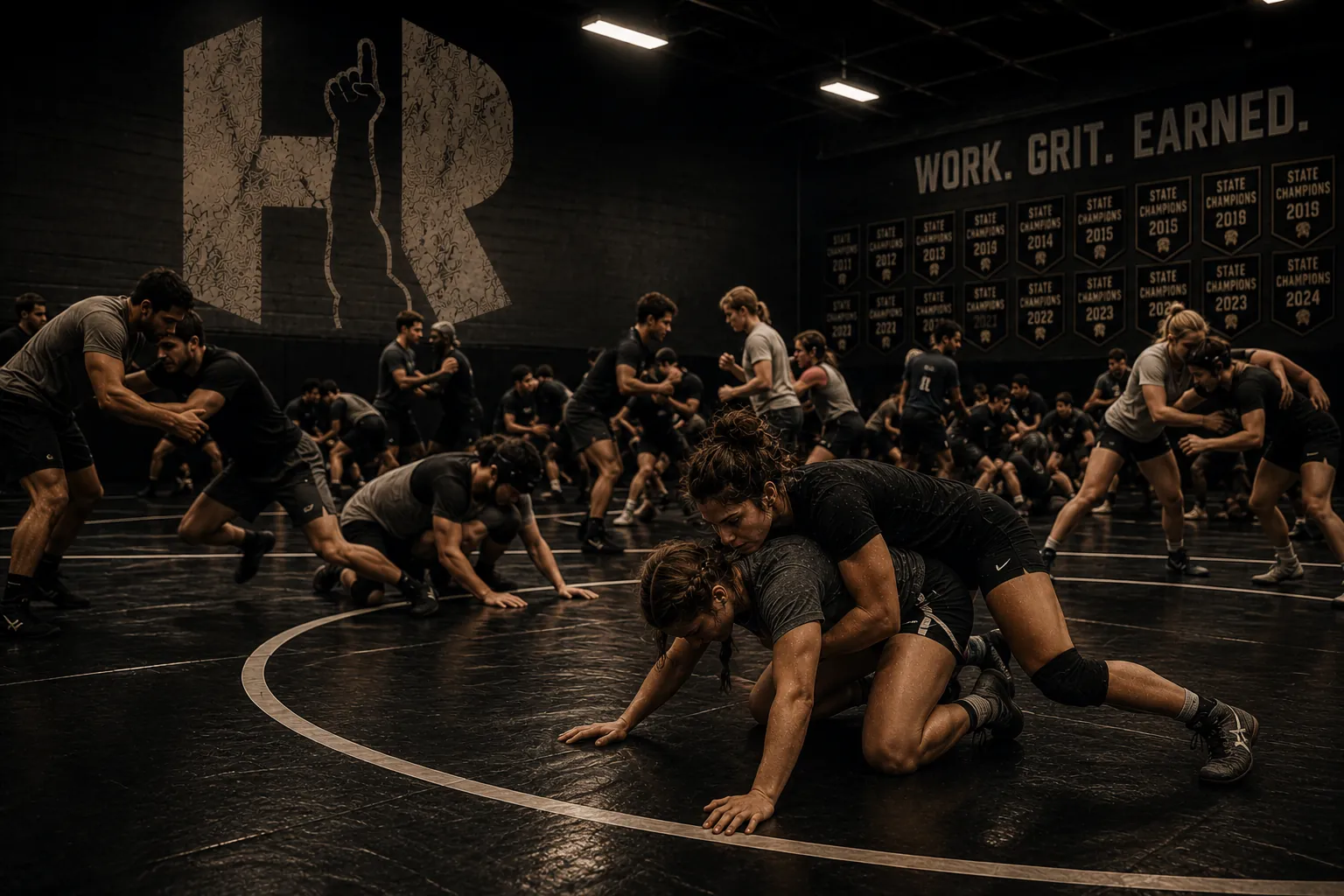
A wrestling practice plan is not a minute-by-minute script that traps a coach. It is a way to decide what the room needs before the room gets loud. Without one, time disappears into long explanations, uneven partner work and conditioning that is hard only because the plan ran out of ideas. With one, every block has a job and athletes get more useful repetitions.
That matters for every group, from a youth room learning its first stance to an experienced team preparing for a dual. USA Wrestling has made the same practical point in its coaching guidance on practice plans: a plan helps a coach keep the room moving while teaching athletes with different experience levels. The goal is not to make practice rigid. It is to make the important work visible before fatigue and distractions take over.
This 90-minute template gives coaches a clear starting point. Adjust the intensity, partner pairings and technical content for the age, season and people on the mat. A qualified coach should always make the final call on safety, contact and workload.
Build the plan around one learning goal
Start with a sentence that a wrestler can understand. “Finish a single after the opponent sprawls.” “Get off the bottom without giving up the near ankle.” “Keep a stance while clearing a collar tie.” Those are usable goals because a coach can see whether the athlete is getting closer.
A vague theme such as “neutral” or “get tougher” is harder to teach. It often creates a practice with five unrelated techniques and no time to repeat any of them. Pick one position, then choose the warm-up movement, drill and live situation that support it. A small, connected practice is usually more valuable than a packed practice that asks athletes to remember everything.
Before practice, write down three things: the learning goal, the one or two coaching cues that matter most and the adjustment you will make if the group needs a simpler version. That last part keeps the plan useful when the room is younger, more tired or less experienced than expected.
Give each block a clear job
A steady practice usually moves from preparation to learning, then from controlled repetitions to a problem that asks wrestlers to apply the skill. Athletes should understand why the next block exists. The warm-up makes the body ready. The demonstration gives them a picture. Drilling gives them repetitions. Situational rounds ask whether the position can survive a little pressure.
This order also keeps conditioning honest. Hard work is part of wrestling, but exhausted athletes do not automatically learn better. When live or conditioning work follows a technical block, it should reinforce the day’s lesson rather than erase it. If the goal is a clean stand-up, the hard work can include short bottom rounds or stand-up repetitions under a clock. It does not need to become a random sprint circuit.

Plan the transitions, not only the drills
A practice can have good activities and still lose twenty minutes between them. Build transitions into the sheet. Decide where athletes put their shoes and water, how partners are assigned, where the next drill starts and what signal ends a round. Tell the room before the first repetition, then use the same signal throughout practice. Athletes do not need a speech every time the activity changes. They need a predictable way to move.
Pairing deserves the same attention. Put newer wrestlers with partners who can give the correct look, not just the hardest resistance. Rotate when a matchup stops being useful. If the room has a wide range of experience, set up two versions of the same task: one group rehearses the start and finish, while another adds a known reaction. Everyone can work on the same lesson without pretending every wrestler needs the same challenge.
Keep a simple clock visible. A coach does not have to stare at it every second, but athletes should learn that a round begins on time, a reset is quick and a transition means move with purpose. That rhythm creates more meaningful contact and less standing around. It also makes the plan easier to adjust, because a coach can see exactly which block needs more time instead of guessing at the end.
A 90-minute wrestling practice plan
0:00 to 0:12, movement and position warm-up
Use twelve minutes to raise the temperature and introduce the day’s position. Start with dynamic movement, tumbling or age-appropriate games, then add stance and motion, level changes, hip movement or partner mirrors that point directly to the skill ahead. The goal is not to make athletes tired before teaching starts. It is to get them moving with intent.
0:12 to 0:25, teach one sequence
Show one position and one response. Keep the demonstration short. Give athletes a clear start, a finish and one or two details to watch. Have a partner demonstrate the look they will give. Then send the room into pairs quickly, because a six-minute speech rarely teaches as well as a clean demonstration followed by coached repetitions.
0:25 to 0:45, cooperative drilling
Give every partner a job. One wrestler runs the technique. The other gives the agreed look, keeps the pace controlled and offers enough shape for the rep to be real. Switch roles on a count. Coaches should move through the room with a single correction, not restart the entire group for every small mistake.
0:45 to 1:05, add a decision
Now let the partner choose between two simple reactions. For a leg attack, the partner might square up or sprawl lightly. For an escape, the partner might cover the near ankle or keep pressure forward. The attacker reads the reaction and chooses the coached answer. This is where a technique starts becoming wrestling instead of choreography.
1:05 to 1:25, situational live rounds
Start athletes exactly where the day’s skill begins. Use short rounds, clear scoring and fast resets. A wrestler who scores or escapes returns to the position. A wrestler who loses the exchange learns to restart. That gives more meaningful repetitions than a long open go where the position only appears once, if it appears at all.
1:25 to 1:30, review and reset
Bring the room together for one minute of calm movement and a quick review. Ask what position they were trying to win and what cue helped. Finish with the next practice in mind: athletes should leave with one clear thing to notice, not a list of corrections they cannot carry.
Make partner drilling active, not automatic
Partner drilling goes flat when one wrestler repeats a move and the other becomes a prop. Give the defensive partner a specific job, even in a cooperative round. They can hold a stance, offer a wrist, keep a proper base or deliver a light, known reaction. That makes the repetition more realistic without asking beginners to solve a full-speed scramble too early.
Use a progression. First, athletes walk through the position. Next, they complete it with clean tempo. Then the partner adds one choice. Finally, they wrestle from that start. The detail that keeps the drill useful is the reset. A fast reset after every rep prevents the strongest or most experienced athlete from taking every turn while others stand and watch.
For groups still learning their base, use the wrestling drills guide to choose fundamental stance, motion and entry work. For experienced athletes, make the same drill more demanding by narrowing the scoring window or asking for a finish after the first reaction, not by adding unrelated moves.
Use live wrestling to test the lesson
Open wrestling is important, but it is not the only way to compete in practice. Situational rounds let coaches place the learning goal under pressure. If the topic is a single-leg finish, start at the leg. If the topic is bottom, start in referee’s position. If the topic is hand fighting, give each athlete a small scoring condition such as earning an angle or a clean attack from the tie.
Short rounds help the pace stay high and make coaching easier. Thirty- to sixty-second goes can be enough when the reset is quick and the situation is specific. They also make it easier to match partners thoughtfully. Newer athletes may need a cooperative look before they are paired with someone who can make the position genuinely difficult.

Adjust the plan for age and season
Younger groups need more frequent changes, simpler rules and more chances to feel successful. A youth practice may shrink the technical explanation, add a movement game and use fewer total live rounds. The coach still has a plan, but the plan respects attention span, maturity and safety. Keeping the room engaged is not a soft goal. It is what keeps athletes present long enough to learn.
Older athletes can handle longer technical chains and harder positional work, but they still benefit from a narrow focus. In season, protect the quality of the live work by trimming unnecessary volume. Before competition, use the plan to sharpen positions and confidence rather than proving who can survive the most fatigue. The National Strength and Conditioning Association’s long-term athletic development guidance emphasizes safe progression, foundational skills and individual differences, all useful reminders for a room with athletes developing at different rates.
Leave room for the coach in front of the room
A practice plan should guide decisions, not replace them. If a new position is clicking quickly, add a reaction or move to situational work earlier. If athletes are missing the same foundation, slow down and shrink the task. A coach who changes the plan because the group needs something different is not abandoning the plan. They are using it.
Finish by writing one sentence for tomorrow: what held up, what did not and what the group needs next. That tiny habit turns practice plans into a season-long record of progress instead of a stack of forgotten sheets. It also makes it easier to see when the room needs more time on a skill and when it is ready for a new problem.

Keep building the work that shows up later
Hands Raised is built for athletes who understand that the good work often happens before anybody is watching. A steady practice plan protects that work. It gives wrestlers more chances to learn, compete and return tomorrow with a better answer. Pair this structure with the wrestling warm-up guide, use the footwork drills to sharpen the first step, and visit Athlete Spotlight for stories from people who keep earning the next round.
Frequently asked questions
What should a wrestling practice plan include?
A useful wrestling practice plan names one learning goal, then gives that goal time in a movement warm-up, coached instruction, partner drilling and a situation where athletes can apply it. It also includes transitions, a short review and room to adjust for the group in front of the coach.
How long should wrestling practice be?
Practice length depends on age, experience, season and available mat time. A focused 60-minute youth session and a focused 90-minute school practice can both work when the coach chooses fewer priorities and protects time for quality repetitions.
How much live wrestling belongs in practice?
Live wrestling should match the day’s goal and the athletes’ readiness. Short situational rounds often teach a new position better than long open rounds. Use more open live work when athletes have the technical foundation and the coach can keep the room safe.
How can a coach keep young wrestlers engaged?
Keep blocks moving, make the task clear and avoid long stretches of standing still. Short demonstrations, partners with defined jobs and a visible transition to the next activity help young wrestlers stay involved while they learn.
Related posts
Wrestling training
Wrestling Drills: 10 Fundamentals for Better Practice
Ten wrestling drills that sharpen stance, movement, entries and hand fighting without turning practice into a random workout.
Read the guide →
Wrestling training
Wrestling Footwork Drills: Move Without Giving Ground
Seven practical wrestling footwork drills for building a steadier stance, sharper angles and cleaner entries.
Read the guide →